Astro Content Collections Made My Blog Pipeline 10x Easier
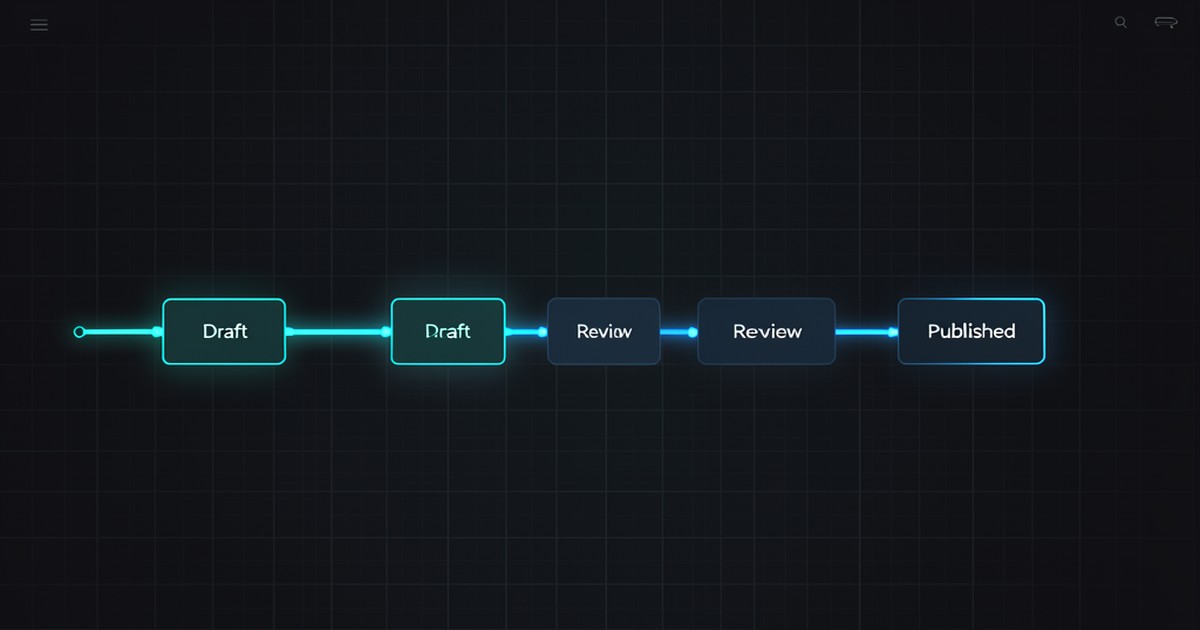
Astro Content Collections Made My Blog Pipeline 10x Easier
I migrated this blog from Astro to Next.js. But I missed Astro's content collections more than I expected. Enough that I rebuilt the same pattern inside a TypeScript data file.
The Content Collection Contract
Astro's content collections enforce a schema on every blog post. Define the shape once — slug, title, date, tags, description — and every post must comply. No missing fields, no inconsistent formatting, no "I forgot the date" commits. The framework validates the contract at build time.
This sounds minor. It is not. Before content collections, I managed blog posts as loose markdown files with YAML frontmatter. Every file was a gamble. One post had tags: ["React", "TypeScript"]. Another had tags: [react, typescript]. A third omitted tags entirely. Frontmatter parsing failed silently, and I only noticed when the blog page rendered a null tag array as "undefined".
The Pattern I Kept
When I moved to Next.js, I could have used markdown files again with gray-matter parsing. Instead, I stored posts as a TypeScript array of typed objects. The same contract Astro enforced, now enforced by the TypeScript compiler.
// typescriptexport const blogPosts: BlogPost[] = [
  {
    slug: "my-post",
    title: "My Post",
    description: "120 characters that show in Google results",
    date: "2026-05-28",
    tags: ["Tag1", "Tag2"],
    content: `# My Post

Body here.`,
  },
];
No parsing step. No missing fields. The compiler catches everything before the build starts.
What I Gained
The content collection pattern forced me to think about content as data with a shape, not as freeform documents. That shift changed how I structured the entire pipeline:
- >Featured images became another field tied to the slug, not a separate file naming convention I had to remember
- >Tags stayed consistent because the array type enforced quotation marks
- >Content used template literals, so I never juggled file imports or path resolution
The pipeline went from "write file, validate manually, check rendering, fix frontmatter, repeat" to "write object, push commit, done."
The Lesson
Astro's content collections taught me that the best content management system is the one that rejects invalid data at compile time, not runtime. I replicated that pattern in Next.js without any content management framework. Just TypeScript, an interface, and a single file.
$ /related
Why AI Agents Need Code Knowledge Graphs
Exploring how code knowledge graphs give AI agents structured understanding of large codebases, enabling better navigation, refactoring, and context-aware reasoning.
Event-Driven Architecture for Payment Systems
Why event-driven patterns are ideal for payment processing — from idempotency to reconciliation to audit trails.
Migrating a Monolith to Microservices Without Losing Your Mind
A practical playbook for incrementally decomposing a monolith — strangler fig pattern, feature flags, and avoiding the distributed monolith trap.